

Almost every leader has it blocked on their calendar. The weekly leadership meeting. And almost every leader is getting it wrong.
I’ve been in rooms where these meetings were scheduled with the best intentions and then watched them slowly deteriorate. They became performative. Predictable. A tax on everyone’s time rather than the engine of the team’s success. After decades of leading at scale, founding companies, and coaching leadership teams of all sizes, I’ve come to believe this:
How you run your weekly leadership meeting is one of the single biggest predictors of whether your team becomes exceptional or just average.
Let me be direct about what’s broken in most of these meetings.
The meeting is inconsistent, it’s shortened, lengthened, or canceled when the diary gets full, which is precisely when you need it most. The leader (or a few of the loudest voices) takes up all the oxygen. Action items are captured in a flurry but rarely followed through. These meetings are too serious. There’s no vulnerability, no laughter, no celebration. And most people leave more confused about their priorities than when they walked in.
And here’s the mistake I see even in fast-growing startups of 50, 60, 80 people:
The leadership table is kept artificially small.
Three people. Four. Five at most. While the rest of the organization the people who actually know what’s broken are never in the room.
That’s not a leadership team. That’s a committee pretending to lead.
This is not a process problem. It’s a leadership problem.
Yes many leaders will say they have great meetings but they are perfunctory in nature.
The Story Nobody Talks About: Startup Cadence
Having coached 50+ founding teams across industries and geographies, here’s what I see most often.
The founders communicate constantly. They’re on Slack, they’re in stand-ups, they’re pinging each other at midnight. The co-founders know each other’s thinking. The leadership team is small enough that information travels fast. So the assumption becomes: we’re aligned. We’re connected.
“We don’t need the ritual because we talk to our teams and we have town halls”
That assumption is quietly killing more startups than bad product decisions ever will. And because everyone is moving fast, nobody stops to ask whether the team is building the kind of trust that survives a bad quarter, a pivot, or a departure.
Speed is used as the reason not to do this. But speed is actually the reason you must.
A consumer goods startup I worked with recently had a growing sales team, real market traction, and a founder who was genuinely excellent at the product. The sales team barely came to the office once a month. The calls that did happen were all about numbers. Pipeline. Conversion. Revenue targets. Every single conversation was transactional. There was no camaraderie. No shared identity. No sense of being part of something together. When results dipped as they inevitably do there was no reservoir of trust to draw on. The team fractured around the stress rather than coming together through it.
The founder told me: “I don’t have time to build the ritual right now. I need to hit my numbers.”
I told him: you won’t hit your numbers without the ritual.
Download the High Performing Leadership Ritual Checklist Below
What 33 Trapped Miners Understood That Most Leaders Don’t
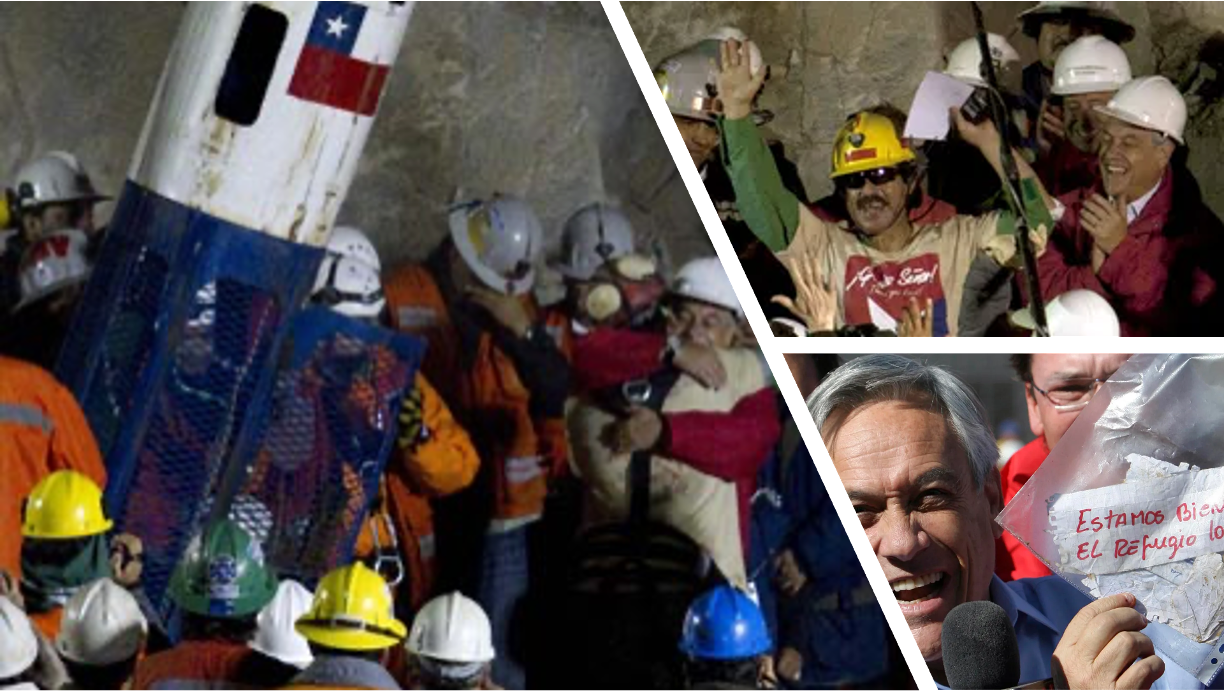
In August of 2010, 33 Chilean miners were trapped nearly a kilometer underground under 700,000 tons of rock. They had food for two people for roughly ten days only. The world didn’t know they were alive for the first 17 days. They didn’t know if the world was looking.
What kept them alive psychologically and physically was not luck or heroics alone.
It was a ritual.
Shift supervisor Luis Urzúa imposed a strict daily structure almost immediately. Cards were distributed so miners could write about their feelings, their fears, their disagreements, a deliberate exercise in psychological safety. Twice-daily prayer meetings provided anchoring and hope. Hygiene and maintenance were non-negotiable, on a rotating roster. Exercise was mandatory. And every single day at noon, all 33 men ate together.
That shared meal was the most powerful ritual of all. Every single day at noon, all 33 men ate together.
That shared meal(although it was meagre) was the most powerful ritual of all. In the middle of uncertainty, scarcity, and fear, they created a moment of community, banter, and shared humanity. It was not optional. It was sacred.
Sixty-nine days later, every single one of them walked out alive.
Now ask yourself: what is the equivalent of that noon meal in your leadership team?
What I’ve Seen Work (and fail) at Every Scale
I want to share some experiences that shaped everything I now believe about this ritual.
When I joined Accenture in 2013, I inherited a team of about 6,000 people. I was new to the city, new to the company, and the mandate was clear growth had plateaued for the center and we needed to turn it around.
The first move was expanding the leadership table carefully. We had four leaders running an organization of 6,000. We went from four to nine first. Got that to work. Then to twelve. Then, as the team grew, to over twenty. Calibrated. Intentional. And critically: I began inviting the functional and enabling leaders Transition, finance, infrastructure into our meetings on a regular basis. This collapsed the distance between senior leadership and the ground in ways no org chart change could. Everyone who mattered was inside the tent. Did not matter who they reported to.
The single most transformational thing, though, was simpler than all of that. We started a weekly leadership meeting every Friday at 2:00 PM on the 10th floor of our central office for 2 hours. Mandatory, unless you had a client commitment or a personal emergency.
Over four and a half years, that meeting became something people genuinely looked forward to. Consistent time, broad participation, a structured agenda with room for the unplanned, a chai break at the halfway point, external speakers, celebrations, cross-functional pairings, skip levels in the room and an offsite where a leader roasted me for 90 minutes in front of 100+ people. When they saw me on the floor laughing at myself, something unlocked.
Permission to be human. Permission to have shortcomings and laugh about them together.
After that, we were unstoppable.
By the time I left, the team had grown from 6,300 to over 25,000+. We deployed 10,000+ robotic process automations. We hosted over 1,100 client visits in a single year in 2016. We built the first digital center Accenture created anywhere in the world.
None of that happened because of a strategy deck. It happened because of a team that trusted each other completely and a Friday meeting that was the beating heart of that trust.
The Pattern Holds at Every Scale
I know what some of you are thinking: that’s a 25,000-person organization. My world looks nothing like that.
I’ve seen this work with 2 people. I’ve also seen it fail at 80.
At VeARC Technologies, a company I founded, we started a standing meeting when there were just the two of us. Me and my first hire every Monday morning at 11:30. We called it AHM. And we never stopped. As the company grew from two to ten to dozens to hundreds, the format evolved but the ritual never broke. Today it still happens every Monday at 11:30, in a large open room on the floor, not a boardroom where the whole team gathers. There was resistance early on from a faction at the second and third level who didn’t like Monday mornings, who had Sunday night plans. For about seven quarters, they pushed back. But eventually, without fanfare, it became muscle. The ritual outlasted the resistance.
In another company I was brought in to coach and help turn around, the leadership meeting exists on paper but barely in practice. Cancelled. Delayed. Topics decided at the last minute. And the table is a tiny four or five people in a company of sixty-plus, which means the people who actually know what’s happening are never in the room. The distance between the leader and the front line never collapses. The team never fully gels.
One of these companies has a culture people fight to stay in. The other has revolving door atrophy. The product quality difference is real. The talent retention difference is real. Both trace back, at least in part, to this one ritual and how seriously it was taken.
10 Things High-Performing Teams Do That Most Leaders Won’t
First get the basics in place: lock the time, set an agenda, celebrate wins, praise in public and coach in private are in the free checklist linked below. What follows are the eight critical moves that actually separate the teams that transform from the ones that just function. These are the ones most leaders know they should do and quietly don’t.
1. Build your Extended Leadership Team even at 50 people. I prefer an expanded leadership team but if you want a core smaller team, then divide your leadership into two tiers. Your core team: four to five direct reports who own the big functions. And your Extended Leadership Team (ELT): fifteen to twenty people who include team leads, functional enablers, skip levels the people one layer closer to the front line. Even at fifty people, even at eighty, you can and should have both. The more people you have under the tent, the faster the distance between leadership and the front line collapses. That collapse is exactly what you’re trying to achieve.
2. Welcome every new member with honor and responsibility. Every time I added someone to the leadership meeting, I sent them a personal email before their first session. I congratulated them. I told them specifically why they were being included. And in the same email, I told them exactly what was expected: an active contribution, a voice that represented not just their function but the scores of people outside that room whose work would be shaped by the decisions made inside it.
Honor and responsibility, in the same breath.
That combination changed how people showed up from day one.
3. Seat everyone at the table. Literally. Not behind someone. Not on a chair against the wall. At the table. I was absolutely insistent on this. Sometimes it meant the room was shoulder-to-shoulder, elbow-to-elbow. That was the point. The physical geometry of a meeting communicates hierarchy or the lack of it more loudly than any words you’ll say. When someone sits at the table for the first time and realizes they are not a guest but an equal, something shifts in how they show up.
4. Watch your own airtime. Measure, even informally, how much you’re speaking versus everyone else. If you’re talking more than 30-40% of the time, you’re not running a leadership meeting, you’re running a broadcast. I made a deliberate habit of asking questions rather than giving answers. The quality of thinking that comes back when you do this will surprise you.
5. Use offsites to go deep, not just decompress. Most organizations run offsites and watch the camaraderie evaporate by Monday morning. That’s because they treat the offsite as a picnic(pressure valve) rather than a trust accelerator. The offsites that changed my teams were the ones where people shared real fears. Real stories. Things they’d only told the people they loved. One of our offsites had a leader open by roasting me for 90 minutes. What it created was permission to be human, to be imperfect, to laugh together. That’s not team-building. That’s a trust crucible. The returns compound for years.
6. Hold the line, even when it’s painful. When someone is consistently out of alignment after genuine, patient, repeated attempts to bring them along, you have to make the hard call. I know how difficult this is. It’s rarely clean. If you’ve built real human connection in this team, it’s genuinely painful. But the rest of your team is watching. They want to know whether you’ll protect the mission or protect the individual. Every day you delay, you’re making a choice that affects every aligned person in that room. Protecting the team sometimes means rotating someone out of it. That’s not a failure of leadership. It is leadership.
7. Share the uncomfortable Details. Really. I gave every leader in the room including skip levels access to information never available before. Full visibility into the real numbers and real issues. In detail. I asked them to treat it with discretion. What happened next: people stopped thinking like function heads and started thinking like owners. The level of accountability and performance that followed was unlike anything I’d achieved through targets or incentives alone. Transparency is not a risk. Opacity is.
8. Design deliberately for hybrid, it doesn’t happen by accident. A hybrid meeting left unmanaged defaults to a two-tier experience: the people in the room connect, the people on the screen observe. A few things I’ve found non-negotiable: cameras on, always, for everyone remote no exceptions. Rotate who facilitates across sessions so remote leaders own the room, not just join it. And double the intentionality around the human moments: the break, the birthday acknowledgment, the celebration because those are the first things that die when a meeting goes virtual and the last things to come back. The principles don’t change in a hybrid world. The effort required to maintain them does.
9. Include the rebels. I initially struggled with this one more than I’d like to admit. There were two leaders on my team who were, let’s say, unique in their style, their bluntness, and their ability to hold up a decision at exactly the wrong moment. One was deeply human-connected, the kind of person who felt everything the team felt before anyone else. The other was a technical expert who made it his personal mission to call out the elephant in the room, every time, regardless of who was in it. Both were direct. Both could confuse or intimidate. There were moments I was genuinely up the wall with them.
But here’s what I came to understand: they completed the picture. Every time. The perspectives they brought from the ground, from the people, from the uncomfortable corners of reality were perspectives no one else in that room could see. Without them, we would have made decisions that looked clean from the top and broke apart in execution.
Today, they are two of my closest friends. I respect them for exactly who they are. And more than anything, they made me a better leader. If your leadership meeting only has people who agree with you, you don’t have a leadership team. You have an echo chamber with a calendar invite.
10. Show up. Every single time. This is perhaps the most underappreciated element of all, and the one I feel most personally.
For this ritual to work for a team to genuinely transform the leader has to show up first. Not just physically. Fully. That means the humility to say I don’t know in front of the people who report to you. It means being vulnerable when vulnerability is the last thing you want to perform. It means owning your mistakes out loud, in the room, before anyone else has a chance to name them.
There were moments in that Friday meeting where I teared up acknowledging a misstep. Moments where I genuinely felt like hiding under the table because I had missed something important and the room could see it. Those moments were not weaknesses. They were the price of admission to a culture where truth gets told.
And showing up extends beyond the meeting itself. When a colleague was sick, undergoing a procedure, going through a personal crisis we showed up. We reached out before being asked. I wrote personal letters. We sent things to people’s homes to say: you are not a resource to us. You are a person we love. That distinction between managing people and genuinely caring about them is something people carry with them long after the meeting ends, long after the project closes, long after they’ve moved on.
Last month, a former team member sent me a letter I had handwritten to him twenty-five years ago about his career, his potential, what I saw in him. He had kept it. I had completely forgotten it existed. When it arrived, it stirred something in me: a reminder that the moments we think are small the letter, the phone call, the showing up are often the ones that last a lifetime.
Show up for the meeting. Show up for the person. That’s the whole thing.
One More Thing: This Meeting Has Seasons
Don’t expect it to arrive fully formed. In the first months, the room is watching you, leaders test what’s safe, what’s real, whether this is different from every other meeting they’ve been in. Your job is radical consistency and radical patience: show up, hold the structure, let your behavior prove this is a place where truth gets told. Between the third and sixth month, something shifts as people start preparing, showing up earlier, the quality of debate improves. By the third quarter, the meeting has its own momentum and the team runs it through you. And when disruption comes: a reorg, a departure, a market shift, teams that have built this muscle move through it faster than teams that haven’t. That’s the most durable return on this investment.
What This Means For You
If you’re a senior leader or CXO reading this and thinking, “I already do a weekly meeting” I want to push you on this: are people looking forward to it? Do they leave energized or depleted? Is there laughter in the room? Do people bring you problems they’d hide anywhere else?
If the answer to any of those is no, you don’t have a meeting problem. You have a culture problem and the meeting is where it shows up most clearly.
The Chilean miners didn’t survive because they had a plan. They survived because they built a living, breathing container of shared purpose, daily ritual, and human dignity. In the most extreme conditions imaginable, they understood something most leaders never learn:
Ritual is not a management tool. It is a lifeline.
So before you close this and move on to your next meeting the one you’re already five minutes late for ask yourself one question:
If your leadership team were trapped together for 69 days, would they come out stronger? Or would the cracks that already exist tear them apart?
That answer tells you everything you need to know about where to start.

Download the free Leadership Meeting Checklist below — the complete list of practices distilled into a one-page guide you can use before your next meeting.
Arshad Sayyad is a 3x founder, former President at Fidelity Investments India, and Managing Director at Accenture. He writes about values-based leadership at www.arshadsayyad.com and publishes the Seranai Leadership series weekly.